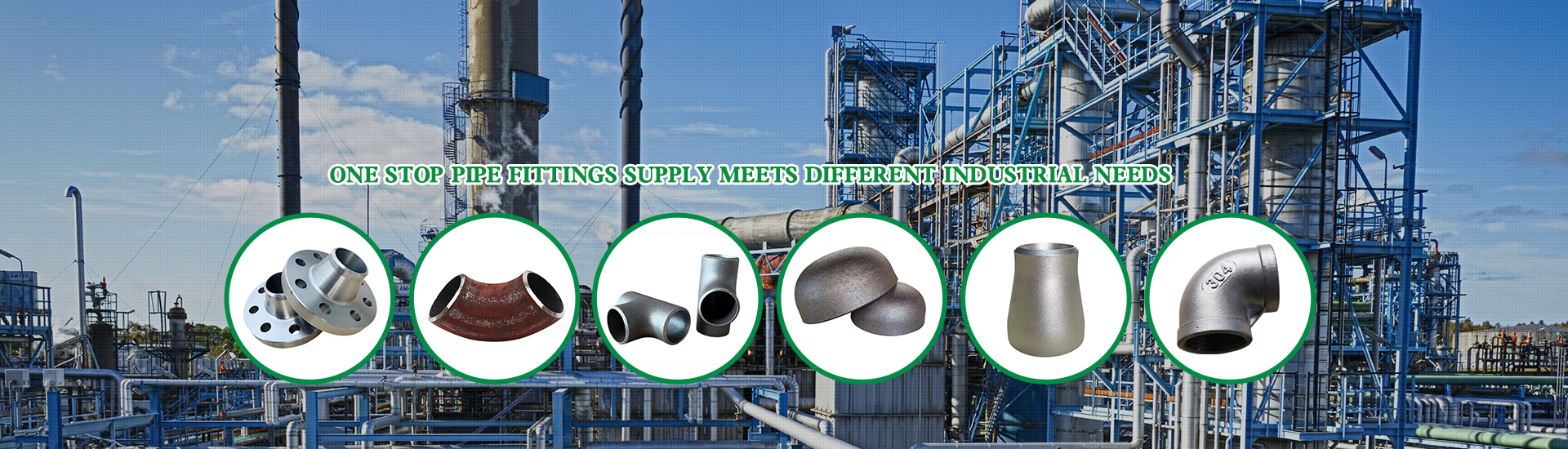
In industrial piping systems, welding fittings play a critical role in ensuring leak-free connections that can withstand extreme pressures, temperatures, and corrosive environments. Selecting the appropriate material for welding fittings is one of the most important decisions engineers and procurement specialists make. The wrong material choice can lead to premature failure, costly downtime, safety hazards, and expensive repairs. This comprehensive guide explores the most common welding fittings materials, their characteristics, applications, and selection criteria to help you make informed decisions for your pipeline projects.
Understanding Carbon Steel Welding Fittings
Carbon steel welding fittings represent the most widely used category in industrial piping applications. These fittings contain varying percentages of carbon, typically ranging from 0.05 to 1.5 percent, which directly influences their mechanical properties. The higher the carbon content, the stronger and harder the material becomes, but its ductility and weldability decrease accordingly. For most industrial applications, carbon steel fittings fall into two main grades: low carbon steel and medium carbon steel.
Low carbon steel fittings, often designated as ASTM A234 WPB, offer excellent weldability and formability while maintaining good mechanical strength. These fittings are ideal for applications operating at ambient to moderately elevated temperatures, typically up to 427 degrees Celsius. Oil and gas transmission pipelines, water distribution systems, and structural piping in commercial buildings frequently specify carbon steel welding fittings due to their favorable balance of strength, cost-effectiveness, and ease of fabrication.
Medium carbon steel fittings provide higher strength but require preheating and post-weld heat treatment to maintain weld integrity. These are specified in heavy industrial applications where mechanical stress and pressure ratings demand superior material performance. Suppliers and manufacturers of carbon steel welding fittings must carefully control the chemical composition and manufacturing process to ensure consistent quality across production batches.
Stainless Steel Welding Fittings: Corrosion Resistance and Performance
Stainless steel welding fittings contain a minimum of 10.5 percent chromium, which forms a passive oxide layer providing exceptional corrosion resistance. This chromium content creates a self-healing barrier that protects the underlying metal from oxidative damage, making stainless steel fittings indispensable in corrosive environments, food processing facilities, pharmaceutical plants, and chemical processing applications.
The most common stainless steel grades for welding fittings include ASTM A403 WP304 and WP316. Type 304 stainless steel offers good general corrosion resistance and is suitable for many atmospheric and mildly corrosive environments. Type 316 stainless steel contains molybdenum, which significantly enhances resistance to chlorides and acidic environments, making it the preferred choice for marine applications, offshore platforms, and chemical processing plants handling aggressive media.
duplex stainless steel fittings, such as ASTM A403 WP2205, combine excellent corrosion resistance with superior mechanical strength. These fittings contain roughly equal parts austenitic and ferritic microstructures, providing double the yield strength of standard austenitic stainless steels while maintaining good toughness and weldability. Duplex fittings are increasingly specified in offshore oil platforms, desalination plants, and pulp and paper industry applications where both strength and corrosion resistance are critical.
Alloy Steel Welding Fittings: High-Temperature Applications
Alloy steel welding fittings contain deliberate additions of elements such as chromium, molybdenum, vanadium, and tungsten to enhance specific properties, particularly high-temperature strength and creep resistance. These fittings are essential in power generation facilities, petrochemical refineries, and high-temperature industrial processes where carbon steel would soften and lose strength at elevated temperatures.
Chromium-molybdenum steel fittings, commonly designated as ASTM A234 WP1, WP5, WP9, and WP22, are the workhorses of high-temperature service. Grade WP1 contains 0.5 percent chromium and 0.5 percent molybdenum and is suitable for service temperatures up to 427 degrees Celsius. Grade WP22, with 2.25 percent chromium and 1 percent molybdenum, extends safe operating temperatures to approximately 566 degrees Celsius, making it ideal for boiler steam piping and heat exchanger systems in power plants.
Selecting the correct alloy steel fitting requires careful consideration of operating temperature, pressure, the chemical nature of the fluid being transported, and potential thermal cycling. Manufacturers of alloy steel welding fittings must implement strict quality control measures, including positive material identification and mechanical testing, to verify that each batch meets the specified chemical and mechanical requirements.
Material Selection Criteria and Best Practices
Choosing the optimal welding fittings material requires evaluating multiple interrelated factors. The primary considerations include operating temperature and pressure, fluid compatibility, environmental exposure, mechanical loading conditions, and budget constraints. A material that performs excellently in one application may fail catastrophically in another if any of these factors are overlooked.
Temperature significantly affects material properties. Most carbon steel fittings experience strength reduction above 427 degrees Celsius, while alloy steel fittings can maintain performance at substantially higher temperatures. Conversely, at cryogenic temperatures below negative 46 degrees Celsius, carbon steel can undergo ductile-to-brittle transition, making austenitic stainless steel the preferred choice for liquefied natural gas and other cryogenic services.
Fluid compatibility is equally crucial. Even the most corrosion-resistant stainless steel can suffer stress corrosion cracking when exposed to certain chloride concentrations at elevated temperatures. Suppliers should provide material test reports and certification documents for all welding fittings, including chemical composition analysis, mechanical property test results, and non-destructive examination records. Always consult with qualified engineers and refer to applicable industry standards such as ASME B31.3 for process piping when specifying welding fittings materials for critical applications.
Conclusion
Selecting the right welding fittings material is fundamental to achieving reliable, safe, and cost-effective piping system performance. Carbon steel fittings offer strength and affordability for general industrial applications, stainless steel fittings provide essential corrosion resistance for aggressive environments, and alloy steel fittings deliver high-temperature performance for power generation and petrochemical processes. By carefully evaluating operating conditions, fluid characteristics, and lifecycle costs, engineers and procurement specialists can specify welding fittings that perform reliably throughout their intended service life. Working with reputable manufacturers and suppliers who demonstrate commitment to quality standards and technical support ensures that your piping system receives fittings engineered for the specific demands of your application.
References
ASM Handbook, Volume 1: Properties and Selection of Iron, Steel, and High Performance Alloys, ASM International
ASME B31.3 Process Piping Code, American Society of Mechanical Engineers
ASTM A234/A234M Standard Specification for Piping Fittings of Wrought Steel, ASTM International
ASTM A403/A403M Standard Specification for Wrought Austenitic Stainless Steel Piping Fittings, ASTM International