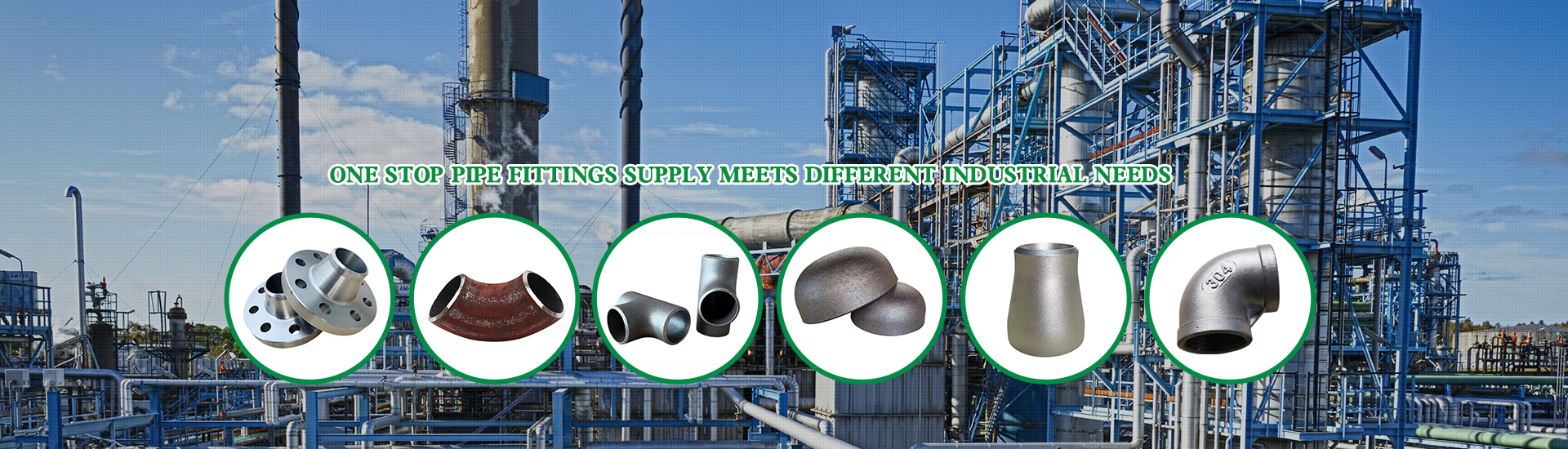
Understanding Stainless Steel Tee Fittings in Piping Systems
The stainless steel tee fitting represents one of the most versatile branching components available to piping engineers and pipeline designers. Functioning as a three-way junction connecting three pipe sections at perpendicular or angular orientations, tees enable flow division, flow combination, and standby line configurations within complex distribution networks. Professional tee fitting manufacturers serve diverse industrial markets ranging from food and beverage processing to offshore oil and gas platforms, supplying millions of units annually to maintain global infrastructure requiring corrosion-resistant pipe connections.
When engineering a piping system demanding exceptional corrosion resistance, mechanical strength, and hygienic surface qualities, stainless steel tee suppliers offer material compositions that far exceed carbon steel alternatives in aggressive chemical environments. The chromium content exceeding 10.5% in all stainless alloys forms a self-healing passive oxide layer protecting internal and external surfaces from pitting, crevice corrosion, and stress crack initiation. Leading tee manufacturers leverage these material advantages to serve semiconductor manufacturing, pharmaceutical production, and marine engineering sectors where contamination control and structural reliability cannot be compromised.
Stainless Steel Grade Classifications and Properties
The austenitic stainless steel family dominates tee fitting production due to its exceptional combination of formability, weldability, and comprehensive corrosion resistance. Grade 304, designated as ASTM A403 WP304 for piping applications, represents the most universally deployed stainless alloy among tee suppliers worldwide. Its 18-percent chromium and 8-percent nickel formulation delivers robust resistance to organic acids, nitric acid exposures, and atmospheric corrosion while remaining economically viable for mainstream industrial construction projects requiring stainless pipe fittings from qualified tee manufacturers.
Grade 316 and 316L variants incorporating 2 to 3 percent molybdenum provide markedly enhanced resistance to chlorides and acidic process media, making them the specification of choice for coastal desalination plants, marine vessel piping, and chemical processing installations handling caustic environments. Professional tee fitting factories utilize ASTM A403 WP316 or WP316L designations to identify these molybdenum-alloyed austenitic structures offering superior pitting and crevice corrosion performance metrics. Duplex stainless steel grades such as 2205 and 2509 represent a newer generation of tee fitting materials combining austenitic and ferritic microstructures delivering yield strengths approximately double those of conventional 304 and 316 alloys while maintaining excellent chloride stress corrosion cracking resistance.
Specialized super austenitic grades containing 6 percent molybdenum, including Alloy 6Mo and AL-6XN, serve extreme environments featuring concentrated halides, sulfuric acid processing, and flue gas desulfurization systems. Premium tee manufacturers investing in advanced melting technologies such as electroslag remelting produce these exotic compositions with tightly controlled impurity levels minimizing susceptibility to caustic stress cracking during fabrication and initial plant commissioning phases. Selection among available stainless grades requires thorough evaluation of process chemistry, operating temperature ranges, chloride concentrations, and total cost of ownership considering replacement intervals and production loss exposure.
Types of Tee Configurations
Equal tee fittings featuring identical bore diameters at all three connections represent the baseline configuration utilized in approximately seventy percent of stainless steel piping installations. When flow division between branch and run sections occurs equally or when branch lines match main pipe dimensions, engineers specify standard equal tees from their preferred stainless steel tee suppliers. These symmetric junctions distribute fluid velocity and pressure drop predictably across both outlet paths, simplifying hydraulic calculations during system design and commissioning.
Reducing tees incorporating branch connections with smaller bore diameters than the run pipe serve applications requiring controlled flow extraction or injection at reduced velocities. Chemical injection points, instrument sampling stations, and drain connections commonly utilize reducing tee configurations to minimize erosion from high-velocity streams while maintaining adequate mainline flow capacity. Reputable tee fitting manufacturers produce reducing tees with branch sizes ranging from one nominal dimension down to three sizes smaller than the run pipe, adhering to dimensional tolerances specified in ASME B16.9 for butt-weld constructions and ASME B16.11 for forged pressure-containing joints.
Sanitary tees featuring mechanically polished interior surfaces with roughness averages below thirty microinches serve pharmaceutical formulations, biopharmaceutical manufacturing, and ultra-pure water distribution systems requiring sterility and cleanability. Semiconductor facilities demand electropolished stainless steel tees eliminating microscopic valleys where bacterial biofilms could nucleate and contaminate ultrapure process chemicals. Established tee manufacturers maintaining clean room fabrication capabilities serve these ultra-high purity markets requiring specialized surface finishing and particle contamination controls beyond standard industrial fitting specifications.
Manufacturing Processes for Stainless Steel Tees
The fabrication of stainless steel tee fittings employs multiple manufacturing pathways depending on production volume, dimensional requirements, and customer specifications. Extrusion represents the dominant production method for medium-volume tee manufacturing across standard size ranges. This process begins with cylindrical steel billets heated to forming temperatures exceeding 2,100°F, then forced through precision dies using hydraulic presses generating forces up to 4,000 tons. The extrusion process aligns the metallic grain structure along the tee contour, enhancing mechanical strength at the critical branch intersection where stress concentrations typically initiate fatigue cracking.
For large-diameter tees exceeding forty-eight inches, fabrication facilities employ plate rolling and orbital welding techniques. Flat stainless steel plates are cut, formed over cylindrical rolls into curved sections, then butt-welded into cylindrical segments matching the main pipe and branch dimensions. Skilled welders utilizing tungsten inert gas processes with high-purity argon shielding produce fusion joints requiring post-weld solution annealing and pickling to restore corrosion resistance in heat-affected zones. Leading tee fitting factories maintain certified welding procedure specifications covering multiple joint configurations and material combinations including dissimilar stainless alloy transitions.
CNC machining from forged or rolled steel blooms serves specialized applications requiring non-standard dimensions, exceptional surface finishes, or exotic material grades unsuitable for conventional forming. Precision tee manufacturers operating five-axis machining centers produce complex geometries incorporating integral flanges, reinforced branch collars, and customized connection interfaces for nuclear, aerospace, and defense installations. These job shop operations command premium pricing but deliver unmatched flexibility for low-volume custom tee fabrication meeting stringent certification requirements from nuclear regulatory agencies and military procurement departments.
Pressure-Temperature Ratings and Design Considerations
The pressure containment capability of stainless steel tee fittings derives from material properties, dimensional tolerances, and geometric reinforcement at the branch-to-run junction. Engineering calculations per ASME B31.3 process piping code establish allowable working pressures accounting for internal pressure loads, external wind and seismic forces, thermal expansion cycles, and occasional impact events. Tee manufacturers provide pressure-temperature rating tables based on ASME B16.9 dimensional standards combined with material allowable stress values published in ASME Section II Part D, enabling piping designers to verify system adequacy without performing complex finite element analyses for standard configurations.
Reinforced tee designs incorporating pad reinforcement or increased branch wall thickness serve high-pressure applications exceeding Class 600 ratings where standard tee geometries prove insufficient for sustained pressure containment. Offshore oil and gas installations, high-pressure steam generation systems, and hydraulic power unit manifolds frequently specify reinforced stainless steel tees to withstand operating pressures exceeding 3,000 psi at elevated temperatures. Qualified tee suppliers offer engineering consultation helping clients select optimal reinforcement strategies balancing weight, cost, and pressure performance for each specific service condition.
Thermal expansion differentials between tee branches and run pipes generate cyclic stresses during startup, shutdown, and load-following operations, necessitating flexibility analysis per B31.3 guidelines to prevent fatigue cracking at stress concentration points. Professional piping design firms utilize finite element stress analysis software modeling actual tee geometries to identify hot spots requiring geometric modification, material upgrade, or operational restriction. Tee fitting manufacturers contributing to these engineering efforts provide accurate stress concentration factor data and fatigue life prediction curves enabling designers to optimize system durability without excessive safety margins inflating construction costs.
References
ASME B16.9-2021: Factory-Made Wrought Steel Butt-Welding Fittings, American Society of Mechanical Engineers
ASTM A403/A403M-23: Standard Specification for Piping Fittings of Wrought Austenitic Stainless Steel for High-Temperature Service, American Society for Testing and Materials
ASME B31.3-2022: Process Piping, American Society of Mechanical Engineers
Viswanathan, R. (2019): Materials for Ultra-Supercritical Coal Power Plants, ASM International, covering high-temperature alloy selection and performance
NACE MR0175/ISO 15156: Petroleum and Natural Gas Industries — Materials for Use in H₂S-Containing Environments in Oil and Gas Production, NACE International