Pipe Fitting Standards Explained: ASME, ASTM, DIN, and International Specifications
Author:Zhengrong Time:2026-06-15 17:35:04 Number of views:67Second-rate
Pipe fitting standards ensure consistent quality, dimensional interchangeability, and reliable performance across products from different manufacturers. Understanding these standards helps engineers specify appropriate products and helps purchasers verify they receive items meeting specifications. This guide provides comprehensive coverage of major pipe fitting standards used in industrial applications worldwide.
American Standards: ASME and ASTM
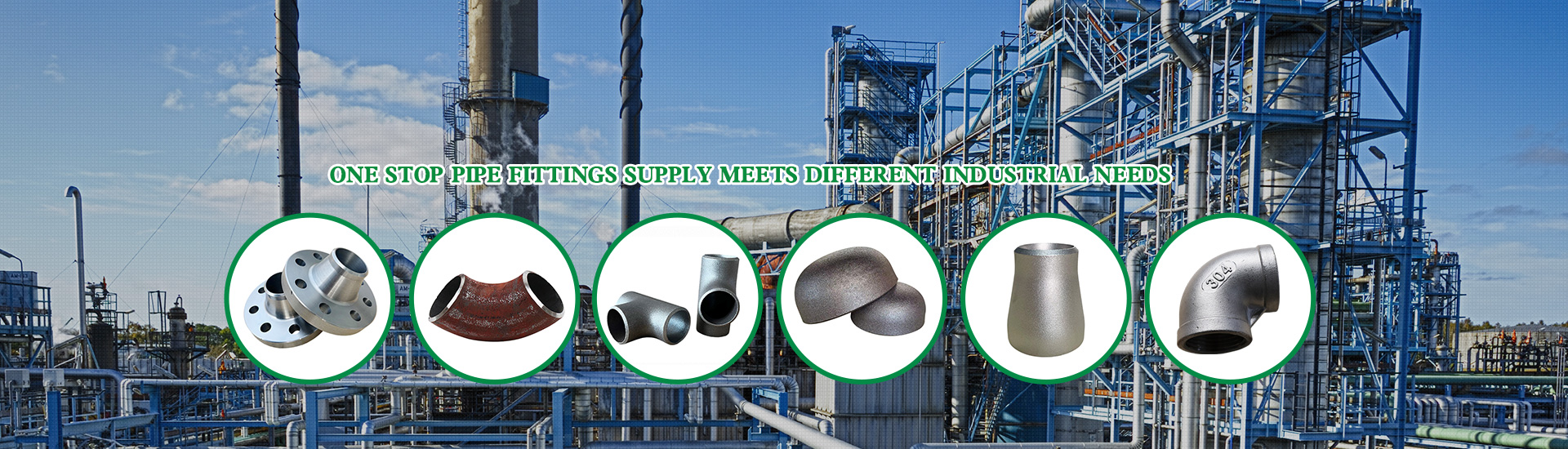
The American Society of Mechanical Engineers develops dimensional standards for pipe fittings through the ASME B16 series of standards. ASME B16.9 covers factory-made wrought butt welding fittings including elbows, tees, reducers, and caps in sizes NPS 1/2 through NPS 24. This standard establishes dimensions, tolerances, and basic design requirements ensuring interchangeability between manufacturers. The companion standard ASME B16.28 covers only short radius elbows and returns for space-limited applications.
ASME B16.5 addresses pipe flanges and flanged fittings in sizes NPS 1/2 through NPS 24, with pressure classes ranging from Class 150 through Class 2500. This standard establishes flange facings, facing types, bolt circle diameters, and other critical dimensions. The comprehensive scope covers flat face, raised face, ring joint, and tongue and groove facings to match various application requirements.
Material specifications originate from ASTM International, formerly the American Society for Testing and Materials. ASTM A234 governs wrought carbon steel and alloy steel fittings for moderate and elevated temperatures. ASTM A403 addresses wrought austenitic stainless steel fittings, while A420 covers low-temperature service carbon steel fittings. Each specification establishes chemical composition requirements, mechanical property requirements, and heat treatment specifications appropriate to the material grade.
Material Specification Details
ASTM A234 includes multiple grades addressing various service conditions. Grade WPA represents carbon steel for general service, while WPB offers higher carbon content for improved higher temperature performance. The WP1 through WP15 grades address chrome-moly alloy compositions, with WP11, WP22, and WP5 being most common in refining and petrochemical applications. Each grade specifies allowable alloying elements and heat treatment requirements ensuring appropriate elevated temperature properties.
Testing requirements verify material conformance and quality. Tension tests verify yield strength and tensile strength meet minimum values. Charpy impact testing verifies notch toughness for low-temperature service and brittle fracture resistance. Hydrostatic testing confirms leak-free performance at specified test pressures. Non-destructive testing including ultrasonic examination and radiographic examination detects internal defects in critical applications.
Certification requirements ensure traceable material identification. Mill test reports document chemical composition, mechanical properties, and heat treatment for each lot. Material test certificates provide documented proof of compliance with specifications. Critical applications require witnessed testing and certified mill test reports verifying all specified requirements.
European Standards: DIN and EN
European standards use the DIN numbering system, though many standards have been superseded by EN (European Norm) designations. DIN 2605 specifies steel pipe elbows and bends, establishing categories based on wall thickness and design pressure. The EN 10253 series covers wrought butt welding fittings with Part 2 specifying specific types and dimensions.
EN 1092 establishes requirements for circular flanges in pressure applications. This comprehensive standard addresses pn-designated flanges (pressurenominal) replacing older DIN flange standards. Pressure ratings range from PN 2.5 through PN 400, with dimensional requirements varying by pressure class. The standard includes requirements for welding neck, slip-on, socket welding, and blind flange types.
European material standards use the numbering systems established by CEN (European Committee for Standardization). Material numbers like 1.0345 (P235GH carbon steel) correspond to specific compositions and properties. These designations enable material identification across European supply chains and facilitate specification compliance verification.
Japanese and Asian Standards
Japan uses JIS (Japanese Industrial Standards) for pipe fittings specifications. JIS B2311 covers steel pipe fittings for ordinary temperature and pressure, while B2312 addresses high-pressure applications. These standards specify dimensions, materials, and testing requirements for domestic Japanese manufacturing and imported products.
Chinese standards use the GB designation, with GB 12459 for steel pipe flanges and GB 13402 for large diameter steel pipe flanges. Chinesemanufacturers commonly produce to multiple standards enabling export to various international markets. Understanding source country standards helps verify applicable requirements for purchased fittings.
Korean standards (KS) similarly address local manufacturing requirements while maintaining compatibility with international specifications. Many Asian manufacturers produce to combinations of JIS, ASTM, and other standards, offering flexibility in product selection. Verifying applicable standard specifications prevents specification confusion during procurement.
Understanding Pressure-Temperature Ratings
Pipe fitting ratings define allowable pressures at various temperatures through published pressure-temperature tables. ASME B16.9 fittings carry pressure-temperature ratings coordinated with pipe schedule ratings of similar materials. The rating decreases with increasing temperature as material strength decreases. Proper selection matches fitting ratings to system design conditions.
Different standards use different rating systems complicating international procurement. American standards use Class designations (150, 300, 600, 900, 1500, 2500), while European standards use PN designations. ASME flanges rated Class 150 roughly corresponds to PN 20, though dimensional differences prevent direct interchangeability. Converting between systems requires careful analysis of applicable standards.
Temperature affects material strength and therefore allowable pressure. Carbon steel loses approximately 20 percent of room temperature strength at 700 degrees Fahrenheit. Chrome-moly alloys maintain strength at higher temperatures but require consideration of creep effects for prolonged elevated temperature service. Fitting ratings must account for maximum sustained operating temperature.
Marking and Identification
Standards require specific marking to identify fitting specifications and manufacturers. ASME B16.9 requires markings including manufacturer identification, material specificationheat number, and size/weight specifications. Additional markings indicate pressure class or schedule when specified. Proper marking enables identification and traceability throughout the supply chain.
Country of origin marking fulfills trade compliance requirements and identifies manufacturing location. Mill marks identify casting or forge numbers enabling material traceability. Heat numbers link individual fittings to mill test reports documenting material properties. Maintaining traceability supports quality assurance programs and failure investigations.
Documentation accompanying fittings provides additional identification and verification. Mill test reports document all specified requirements have been met. Inspection certificates verify examination and testing have been completed. Certificates of conformance confirm products meet purchaser specifications. Complete documentation protects both purchasers and manufacturers from quality disputes.
Specifying and Ordering
Proper specification includes both dimensional standards and material specifications. Specifying ASME B16.9 establishes dimensional requirements while ASTM A234 establishes material requirements. Additional requirements address test methods, examination extent, and documentation. Clear specifications prevent ambiguity and ensure appropriate products are supplied.
The ordering process converts specifications into purchasable items. Clear communication of standard, material, quantity, and delivery requirements prevents supply errors. Requiring mill test reports and inspection certificates verifies specification compliance. Establishing quality agreements protects both parties and defines acceptable products.
Conclusion
Pipe fitting standards enable global commerce by establishing consistent requirements for dimensions, materials, and quality. American ASME/ASTM, European DIN/EN, and Asian JIS/GB standards each serve regional manufacturing and specify compatible products. Understanding these standards enables appropriate specification and verification of product quality.
References
American Society of Mechanical Engineers. (2023). ASME B16.9 - Factory-Made Wrought Butt Welding Fittings.
American Society for Testing and Materials. (2022). ASTM A234 - Standard Specification for Piping Fittings.
European Committee for Standardization. (2021). EN 10253 - Butt Welding Pipe Fittings.
Japanese Standards Association. (2020). JIS B2311 - Steel Pipe Fittings for Ordinary Use.