The Critical Role of Flanges in Piping System Architecture
Pipe flanges constitute the most widely utilized connection methodology across industrial piping infrastructure, enabling reliable bolted assembly and disassembly for maintenance, modification, and inspection purposes. Every major flange manufacturer recognizes that these seemingly simple disc-shaped components bear enormous responsibilities within pressurized piping networks, resisting internal forces exceeding thousands of pounds while maintaining gasket compression sufficient to prevent hazardous fluid leakage. Global flange suppliers ship millions of units annually to serve petrochemical complexes, power generation stations, marine vessels, and municipal water treatment facilities demanding leak-free bolting junctions throughout their operational lifespans.
The engineering sophistication behind flange design extends far beyond basic geometry, encompassing complex stress distributions, thermal expansion compensation, bolt preload management, and gasket seating mechanics. Leading flange manufacturers invest heavily in finite element analysis and experimental validation to optimize flange profiles minimizing stress concentration factors while controlling manufacturing costs for mass production. When sourcing flanges from established pipe fitting factories, buyers gain access to engineered solutions validated through decades of operational experience across every conceivable industrial service environment from cryogenic liquid nitrogen transfer to 1,200°F superheated steam delivery.
Primary Flange Types and Their Engineering Applications
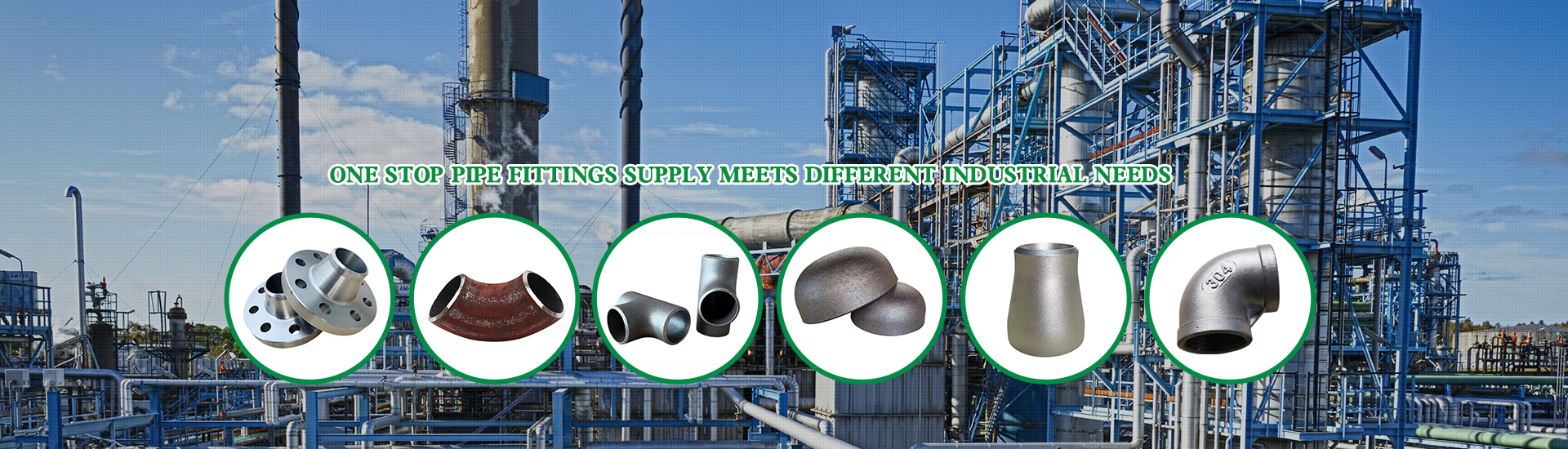
Weld neck flanges featuring a tapered hub transitioning smoothly into the connected pipe represent the premier choice for critical high-integrity piping services. This distinctive hub geometry dramatically reduces stress concentrations at the weld joint compared to blank-faced connection methods, making weld neck configurations the standard specification for high-pressure, high-temperature, and cyclic service applications requiring maximum joint reliability. Professional flange suppliers recommend weld neck designs for process piping handling toxic fluids, cryogenic services below minus 20 degrees Fahrenheit, and steam systems operating above 500 degrees Fahrenheit where bolted joint failure consequences demand conservative engineering approaches from knowledgeable flange manufacturers.
Slip-on flanges slipping over pipe extremities before fillet welding on both inner and outer circumferences offer economical connection solutions for low-pressure utility services and non-hazardous fluid transfer. These straightforward designs eliminate the precise butt preparation tolerances demanded by weld neck installations, accelerating field assembly schedules and reducing fabrication labor costs on projects featuring thousands of routine pipe connections. Experienced flange manufacturers produce slip-on configurations meeting ASME B16.5 dimensional standards across material grades from carbon steel through nickel alloys, providing piping contractors versatile inventory stocking strategies serving multiple project requirements from single manufacturing source.
Blind flanges functioning as solid disc barriers completely obstructing pipe endings, vessel nozzles, and valve access points enable system isolation, pressure testing, and future expansion provisions without welded closures requiring cutting for removal. Piping engineers specify blind flanges extensively at pump suction and discharge isolations, tank farm outlet connections, and pipeline termination points requiring periodic plugging and unplugging for operational flexibility. Reputable flange suppliers stock blind configurations in popular sizes and pressure classes alongside custom fabrications for specialized applications incorporating center removing lugs, vent connections, or instrument mounting provisions manufactured to individual customer drawings by flexible pipe fitting factories.
Additional Flange Configurations for Specialized Services
Socket weld flanges accommodating pipes inserted into recessed cavities before fillet welding atop shoulder surfaces serve small-diameter high-pressure instrumentation lines and process sampling systems typically under two inches nominal pipe size. This connection method provides superior alignment capability compared to threaded joints while avoiding the gap corrosion vulnerabilities inherent in slip-on weld configurations. Socket weld flange manufacturers design bore diameters slightly enlarged relative to matching pipe to prevent inner surface protrusion obstructing flow or trapping particles during manufacturing, demonstrating the precision engineering standards maintained by professional flange suppliers serving semiconductor and pharmaceutical markets.
Threaded flanges incorporating National Pipe Taper or British Standard Pipe parallel thread formats eliminate welding requirements entirely for applications where hot work permits restrict fabrication activities or where future disassembly frequency justifies the premium over welded connection methods. Oil and gas field installations frequently specify threaded flange configurations at wellhead manifold connections, gauge instrument tap locations, and chemical injection points requiring regular maintenance access. Established flange manufacturers produce threaded designs with precision-machined thread profiles meeting ASME B1.20.1 tolerances ensuring reliable seal formation without thread sealant compounds in clean service applications supplied by quality-conscious pipe fitting factories.
Lap joint flange assemblies pairing stub ends with backing flanges enable easy bolt hole alignment during pipe rotation and frequent flange face separation for inspection without cutting or unwelding pipe connections. These innovative configurations serve tank farm piping, shipboard utility systems, and modular construction projects prioritizing assembly speed and maintenance accessibility among pipe fitting factories worldwide. Leading flange suppliers maintain extensive lap joint inventories in carbon steel, stainless steel, and alloy materials coordinating with stub end offerings providing complete bolted connection solutions for projects demanding maximum installation efficiency from their flange manufacturer partnerships.
Material Selection Framework for Flange Applications
Carbon steel flanges fabricated from ASTM A105 forged compositions or ASTM A234 welded formations serve the vast majority of industrial piping applications featuring moderate temperatures, non-corrosive process fluids, and atmospheric service environments. These economical flange materials from mainstream pipe fitting factories deliver excellent mechanical properties, weldability characteristics, and cost performance ratios justifying their dominant market share across oil refineries, chemical plants, and commercial construction projects. Flange manufacturers maintaining heat treatment capabilities provide normalized or stress-relaxed carbon steel products minimizing hydrogen-induced cracking susceptibility during welding and post-weld heat treatment procedures.
Stainless steel flanges incorporating 304, 316, 316L, and duplex 2205 alloy formulations address corrosive process chemistries, ultra-high purity requirements, and marine exposure conditions demanding superior oxidation resistance. Specialty flange suppliers serving pharmaceutical manufacturing, food processing, and semiconductor fabrication maintain dedicated stainless steel production lines preventing cross-contamination from carbon steel particles that could initiate galvanic corrosion or product contamination incidents. Professional pipe fitting factories execute solution annealing treatments at 2,000 degrees Fahrenheit followed by rapid water quenching to dissolve chromium carbide precipitations restoring maximum corrosion resistance in sensitized heat-affected zones from flange welding operations.
Alloy and exotic metal flanges manufactured from nickel 200, Inconel 625, Hastelloy C276, and titanium Grade 2 compositions serve extreme environments featuring concentrated acids, high-temperature oxidation, and seawater immersion demanding material selections beyond conventional stainless steel capabilities. Niche flange manufacturers investing in vacuum arc remelting and electroslag remelting furnaces produce these premium alloys meeting aerospace and nuclear certification requirements for applications where material failure carries catastrophic consequences. Engineering buyers consulting with specialized flange suppliers obtain comprehensive material certifications documenting melting route, chemical analysis, mechanical testing, and non-destructive examination results justifying the substantial cost premiums inherent in exotic alloy bolted connection fabrication.
Manufacturing Standards and Quality Assurance
ASME B16.5 establishes the definitive dimensional, pressure-temperature rating, and testing framework for flanges spanning nominal pipe sizes half through twenty-four across pressure classes 150 through 2500. Every accredited flange manufacturer maintains coordinate measuring equipment verifying bolt hole circle diameters, bolt hole quantities, flange thicknesses, hub dimensions, and neck taper angles against B16.5 tolerance allowances ensuring field interchangeability among products from different factory sources. Pipe fitting factories exporting internationally additionally comply with European EN 1092-1, Japanese JIS B2220, and Australian/Asian AS 4087 standards expanding market access across regional infrastructure projects requiring code-compliant flange supply chains.
Material certification requirements mandate that every flange shipment from reputable suppliers accompany mills test reports documenting chemical composition via optical emission spectroscopy, mechanical testing including tensile, hardness, and impact values, and non-destructive examination results from liquid penetrant or ultrasonic inspection methods. Critical service applications involving sour gas, nuclear containment, or high-energy fluid delivery demand additional positive material identification verification and radiographic examination of weld fusion zones in weld neck flange hubs. Professional flange manufacturers maintain quality management systems certified to ISO 9001 standards documenting complete production traceability from raw material receipt through final packaging and shipment delivery to customer facilities worldwide.
References
ASME B16.5-2023: Pipe Flanges and Flanged Fittings NPS 1/2 through NPS 24, American Society of Mechanical Engineers
ASME B16.47-2022: Large Diameter Steel Flanges NPS 26 through NPS 60, American Society of Mechanical Engineers
ASTM A105/A105M-29: Standard Specification for Carbon Steel Forgings for Piping Applications, American Society for Testing and Materials
Shirvill, E. (2020): Gaskets and Flanges, Gulf Professional Publishing, covering bolted joint design and integrity management
ISO 7-1:2000: Threadings for tubes and pipes — Thread geometry and dimensions, International Organization for Standardization