Types of Flanges and Their Applications in Industrial Piping Systems
Author:Zhengrong Time:2026-06-09 15:08:52 Number of views:115Second-rate
Types of Flanges and Their Applications in Industrial Piping Systems
Flanges serve as critical components in industrial piping systems, providing secure connections between pipes, valves, pumps, and other equipment. Understanding the various flange types and their appropriate applications is essential for engineers, contractors, and project managers working in industries such as oil and gas, chemical processing, power generation, and water treatment. This comprehensive guide explores the most common flange types, their characteristics, and the specific applications where each type excels.
Weld Neck Flanges
Weld neck flanges, also known as welding neck flanges or WN flanges, feature a long tapered hub that transitions gradually from the pipe to the flange face. This design provides exceptional strength and resistance to stress, making weld neck flanges the preferred choice for high-pressure and high-temperature applications. The tapered hub distributes stress evenly, reducing the risk of fatigue failure in demanding environments.
These flanges are typically used in critical applications where leak integrity is paramount, including hydrocarbon processing, steam systems, and boiler connections. The butt weld connection ensures a smooth bore that minimizes turbulence and pressure drop within the pipeline. Manufacturing facilities producing weld neck flanges employ rigorous quality control measures to ensure dimensional accuracy and proper wall thickness throughout the hub transition area.
Slip-On Flanges
Slip-on flanges, abbreviated as SO flanges, slide over the pipe and are welded both inside and outside to secure the connection. This straightforward design facilitates installation and alignment, making slip-on flanges popular in general-purpose applications where ease of assembly is prioritized. The flange bore is slightly larger than the pipe outer diameter, allowing the pipe to slip into position before welding.
While slip-on flanges offer convenient installation, they are generally suitable for lower pressure classes and non-critical applications. Common uses include water distribution systems, HVAC piping, and low-pressure steam lines. Many pipe fitting suppliers offer slip-on flanges in various materials including carbon steel, stainless steel, and alloy compositions to match different service conditions.
Blind Flanges
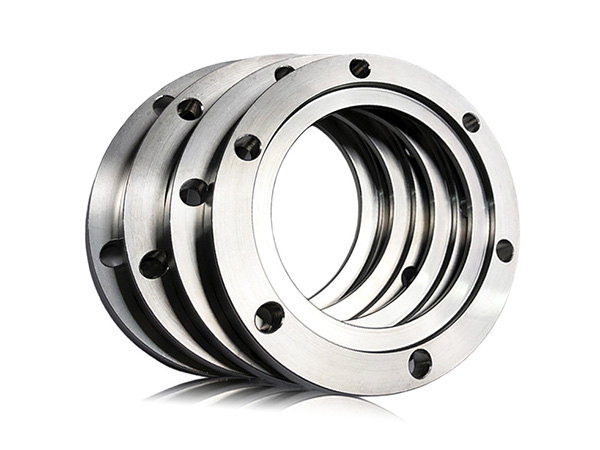
Blind flanges serve as closure devices for pipeline openings, pressure vessels, and equipment nozzles. Unlike other flange types that connect to pipes, blind flanges consist of a solid disk with bolt holes around the perimeter. These flanges enable future access to piping systems for maintenance, inspection, or modification without requiring extensive disassembly of adjacent equipment.
The pressure rating of blind flanges must match or exceed the adjacent piping system to ensure adequate containment. In high-pressure applications, blind flanges may require additional reinforcement or thicker dimensions to prevent deformation under load. Industrial facilities often keep blind flanges in inventory as part of their maintenance equipment, enabling quick isolation of sections for repair work.
Socket Weld Flanges
Socket weld flanges feature a socket-like bore where the pipe end fits before being welded. The pipe inserts into the socket, creating a narrow gap that receives a fillet weld on the outside. This connection method provides good strength and is suitable for small-diameter piping in high-pressure applications. The socket design helps align the pipe during assembly and maintains proper fit-up.
These flanges are commonly specified in petrochemical refineries, chemical plants, and power generation facilities for process piping under 4 inches in diameter. The socket weld configuration produces a smooth internal surface that reduces erosion and particle accumulation. Quality flange manufacturers machine socket bores to precise tolerances to ensure proper fit and optimal weld quality.
Threaded Flanges
Threaded flanges, also called threaded blind flanges or screw flanges, feature internal threads that accept matching external pipe threads. This design enables connection without welding, making threaded flanges valuable in applications where welding is impractical or prohibited. They provide a leak-tight seal when properly threaded and can be installed and removed without special equipment.
Threaded flanges find application in low-pressure systems, temporary installations, and locations where future modification is anticipated. However, their use has declined in recent decades due to concerns about thread leakage and the availability of better connection methods. When threaded flanges are specified, careful attention to thread quality and proper sealing compounds is essential for reliable performance.
Lap Joint Flanges
Lap joint flanges, sometimes referred to as loose flanges, work in conjunction with a stub end that welds to the pipe. The flange itself slides over the stub end and rotates freely, allowing easy alignment of bolt holes during assembly. This design proves advantageous in applications requiring frequent disassembly or where thermal expansion creates movement between the pipe and equipment.
The lap joint configuration is particularly useful when the flange face must be flush with the pipe interior or when the connected equipment has limited rotation capability. Stub ends come in various configurations including slip-on and welding neck types, providing flexibility in matching the application requirements. This flange type is commonly specified in piping systems handling corrosive fluids where the stub end material can be selected for corrosion resistance while using less expensive flange material.
Choosing the Right Flange Type
Selecting the appropriate flange type requires careful consideration of multiple factors including operating pressure, temperature, fluid characteristics, installation requirements, and maintenance accessibility. Each flange design offers specific advantages that make it suitable for particular applications. Consulting with experienced flange suppliers or specification engineers helps ensure optimal selection for each unique project requirement.
Quality manufacturing practices and proper material selection significantly impact flange performance and service life. Reputable flange manufacturers implement comprehensive testing programs including dimensional inspection, material analysis, and non-destructive examination to verify product quality. Whether sourcing from domestic foundries or international manufacturing facilities, specifying certified products from qualified suppliers ensures reliable performance in demanding industrial environments.
Conclusion
Understanding flange types and their appropriate applications is fundamental to successful piping system design and installation. From the high-strength weld neck flange to the versatile lap joint configuration, each type serves specific purposes in industrial settings. Working with knowledgeable suppliers and manufacturers helps project teams select the most appropriate flange solutions while maintaining quality and cost-effectiveness throughout the project lifecycle.
References
American Society of Mechanical Engineers. (2023). ASME B16.5 - Pipe Flanges and Flanged Fittings: NPS 1/2 through NPS 24 Metric/Inch Standard.
European Committee for Standardization. (2020). EN 1092-1 - Flanges and their joints - Circular flanges for pipes, valves, fittings and accessories, PN designated.
Process Industry Practices. (2019). PIP CCVFLG - Flange Bolting Guideline for Steel Piping.
American Petroleum Institute. (2021). API 600 - Bolted Bonnet Gate Valves for Petroleum and Natural Gas Industries.