How to Select the Right Elbow Fittings for Your Pipeline Project
Author:Zhengrong Time:2026-06-03 12:02:44 Number of views:159Second-rate
How to Select the Right Elbow Fittings for Your Pipeline Project
Elbow fittings represent one of the most frequently used components in piping systems, enabling directional changes and route navigation around obstacles. Selecting the appropriate elbow involves understanding multiple parameters including bend angle, radius configuration, material grade, and dimensional standards. This guide provides comprehensive information to assist engineers and contractors in making informed selections for industrial pipeline projects.
Understanding Elbow Bend Angles
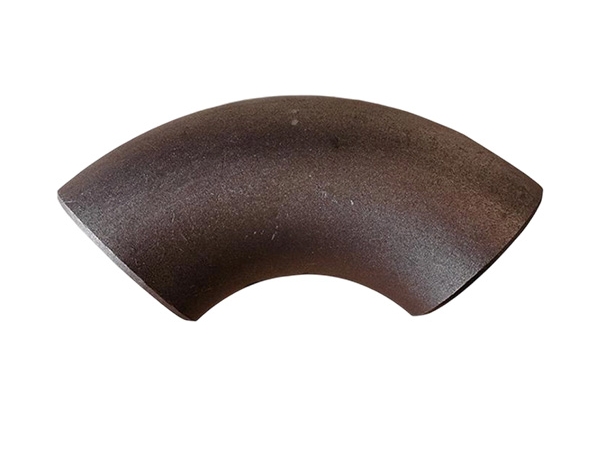
The bend angle determines the directional change provided by the elbow fitting. Standard angles include 90 degrees, 45 degrees, and 180 degrees, with 90-degree elbows being the most common in industrial applications. The 90-degree elbow produces a sharp turn, making it suitable for situations requiring immediate direction change where space constraints exist. These fittings reduce the overall routing length but create greater flow disturbance compared to longer radius configurations.
Forty-five degree elbows provide gentler directional transitions, reducing pressure loss and erosion within the piping system. These elbows prove particularly valuable in applications where flow velocity is high or where minim turbulence helps extend service life. The 180-degree elbow, sometimes called a return bend or U-bend, reverses flow direction completely and is commonly used in boiler feedwater lines, steam tracing, and heat exchanger connections. Many industrial suppliers stock standard angle variations to meet common project requirements.
Radius Configuration: Long Radius Versus Short Radius
The radius dimension defines the curvature of the elbow and significantly impacts flow characteristics and space requirements. Long radius elbows (LR) feature a centerline radius equal to 1.5 times the nominal pipe size, while short radius elbows (SR) have a radius equal to the pipe size. The longer radius produces smoother flow transitions with reduced pressure drop and less turbulent flow separation.
Short radius elbows occupy less space but create higher pressure losses and increased erosion potential, particularly in high-velocity applications. Processing facilities with space constraints often specify short radius elbows in auxiliary piping where the primary concern is minimizing layout footprint. However, the additional pressure drop translates to higher pumping costs over the operational lifetime, and this economic factor should influence selection decisions. Most specifications default to long radius elbows for main process piping due to their superior hydraulic performance.
Material Selection Considerations
Material selection for elbow fittings depends primarily on the service fluid characteristics, operating temperature, and pressure conditions. Carbon steel elbows suit general service applications handling water, steam, air, and non-corrosive hydrocarbons. These elbows provide adequate strength at competitive cost and accommodate standard manufacturing techniques including cold bending and hot forming.
Stainless steel elbows offer superior corrosion resistance for chemical processing, pharmaceutical, and food industry applications. The chromium content creates a passive oxide layer that protects against aggressive chemicals and high-temperature oxidation. Duplex stainless steel variants provide enhanced strength and improved corrosion resistance for marine environments and chloride-containing process streams. Alloy selections including Inconel, Hastelloy, and titanium serve extremely corrosive applications where carbon steel and stainless steel prove inadequate.
Dimensional Standards and Specifications
Industrial elbow fittings conform to dimensional standards established by organizations including ASME, ASTM, and MSS. The ASME B16.9 standard covers factory-made wrought butt welding fittings including elbows, while MSS SP-43 provides specifications for lightweight butt welding fittings. These standards ensure dimensional consistency and interchangeable fit between products from different manufacturers.
The standard sizing system uses nominal pipe size (NPS) designations rather than actual measured dimensions. Understanding this distinction prevents ordering errors and ensures proper fit during installation. Additionally, pressure class ratings (Class 150, 300, 600, 900, 1500, and 2500) define the pressure-temperature relationships governing fitting performance. Proper matching of elbow pressure class to system design conditions prevents premature failure and ensures safe operation.
Manufacturing Methods and Quality Indicators
Multiple manufacturing methods produce elbow fittings, each with characteristic properties influencing performance. Hot forming produces elbows by heating pipe or induction bending at elevated temperatures, resulting in consistent wall thickness throughout the bend.Cold forming creates elbows at ambient temperatures using specialized bending machinery, producing closer dimensional tolerances but potentially requiring additional processes to achieve desired geometry.
Segmented elbows, sometimes called multi-piece elbows, construct the bend from multiple shorter pipe segments welded together. This manufacturing method accommodates large diameter and heavy wall thickness requirements where single-piece forming proves impractical. While segmented elbows cost less to manufacture, the internal weld seams require careful inspection and may create turbulence. Seamless elbows eliminate internal weld concerns and represent the preferred choice for critical applications in oil and gas, chemical processing, and power generation facilities.
Installation and Fabrication Considerations
Proper installation techniques ensure elbow fittings perform reliably throughout their service life. Welding procedures must account for material thickness variations between the elbow and adjacent pipe, and preheat requirements apply for certain materials to prevent hydrogen cracking. Post-weld heat treatment may be necessary for chrome-moly alloys and other materials susceptible to sensitization or residual stress buildup.
Supporting elbows properly prevents excessive loading on the connection points. Unbalanced forces from directional changes require appropriate anchoring or guided supports to prevent joint stress. Expansion loops and flexibility analysis help determine appropriate support locations and types. Fabricators should verify bevel angles match the welding configuration and confirm proper alignment before completing welds.
Conclusion
Selecting appropriate elbow fittings requires integrated consideration of system requirements, fluid characteristics, installation conditions, and life-cycle costs. Long radius carbon steel elbows serve general purpose applications, while specialized materials address corrosive or high-temperature requirements. Conforming to established dimensional standards ensures interchangeability, and quality manufacturing practices guarantee reliable performance.
References
American Society of Mechanical Engineers. (2020). ASME B16.9 - Factory-Made Wrought Butt Welding Fittings.
Manufacturers Standardization Society. (2018). MSS SP-43 - Standard Practice for Light-Weight Stainless Steel Butt Welding Fittings.
Towler, G. (Ed.). (2021). Sinnott Chemical Engineering Design. Elsevier.
Mohan, R. (2019). Piping Components and Selection. McGraw-Hill Education.