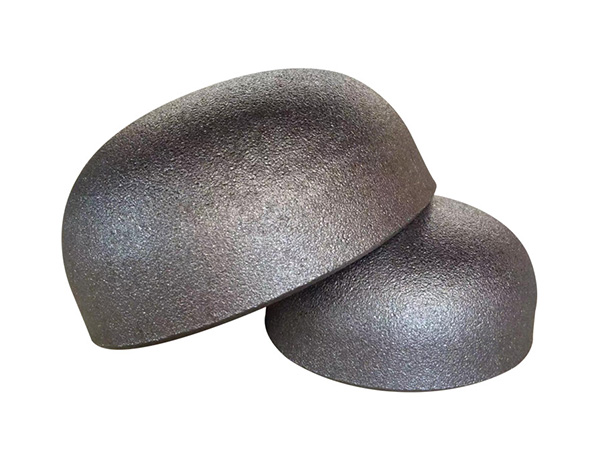
Carbon Steel Pipe Cap
Carbon Steel Pipe Cap Product Overview The Carbon Steel Pipe Cap is a robust industrial fitting designed to permanently seal the end of a pipeline or to function as a pressure vesse...

Product Details
Carbon Steel Pipe Cap
Product Overview
The Carbon Steel Pipe Cap is a robust industrial fitting designed to permanently seal the end of a pipeline or to function as a pressure vessel head. Also known as a 堵头 (dǔtóu) or 封头 (fēngtóu), this component is critical for terminating fluid or gas flow and maintaining system pressure. Manufactured from high-strength carbon steel, it offers superior mechanical durability and cost-effectiveness, making it the standard choice for heavy-duty applications in oil and gas, power generation, and water transmission infrastructure.
Key Features and Benefits
High Mechanical Strength: Engineered to withstand high internal pressures and external loads, ensuring the safety and stability of the pipeline termination.
Cost-Effective Solution: Carbon steel provides an optimal balance of performance and affordability, making it ideal for large-scale industrial projects where extreme corrosion resistance is not required.
Versatile Geometries: Available in various shapes including Ellipsoidal, Torispherical (Dish), Hemispherical, Flat, and Conical to meet specific pressure ratings and flow requirements.
Durable Protection: Typically finished with black varnish, red oil, or galvanized coatings to prevent surface rust and ensure longevity during storage and transport.
Secure Termination: Provides a permanent, leak-proof seal (via welding) that protects the pipeline interior from environmental contaminants.
Technical Specifications
Product Name: Carbon Steel Pipe Cap
Material Grades: ASTM A234 WPB, WPC, A420 WPL6; GB/T Q235, 20#, 16Mn, Q345B.
Size Range: DN15 (1/2") to DN1200 (48") and larger.
Wall Thickness: SCH 10, SCH 20, SCH 40, SCH 80, SCH 160, XXS, STD, XS.
Connection Types: Butt Weld (BW), Socket Weld (SW), Threaded (NPT/BSP).
Standards: ASME B16.9, ASME B16.11, GB/T 12459, GB/T 25198, DIN 2617, JIS B2313.
Product Classification
Carbon steel pipe caps are categorized based on their shape and manufacturing method:
By Shape:
Ellipsoidal Cap: The most common type, offering good pressure distribution and a lower profile than hemispherical caps.
Torispherical (Dish) Cap: Features a knuckle radius, suitable for lower pressure applications.
Hemispherical Cap: Ideal for high-pressure vessels as it distributes stress evenly across the surface.
Flat Cap: Used for low-pressure applications or as a blind flange alternative.
By Connection:
Butt Weld: For permanent, high-integrity connections in pipelines (typically DN50 and above).
Socket Weld/Threaded: For smaller diameter pipes (typically DN40 and below), allowing for easier installation.
Applications
Our Carbon Steel Pipe Caps are utilized across a wide spectrum of industries:
Oil & Gas and Petrochemical: Sealing high-pressure transmission pipelines, separators, and scrubbers.
Power Generation: Terminating steam lines, boiler tubes, and feedwater systems.
Water Treatment: Capping large-diameter aqueducts and distribution mains.
Construction & Infrastructure: Structural piping, piling caps, and HVAC systems.
Shipbuilding: Seawater ballast systems and cargo tank piping.
Quality Assurance
We strictly adhere to international manufacturing standards to ensure the safety and reliability of every pipe cap. Our production process includes rigorous material verification, dimensional inspection, and non-destructive testing (NDT) such as radiography and ultrasonic inspection. We provide full traceability and documentation, including EN 10204 3.1 Mill Test Certificates, to guarantee compliance with ASME, GB, and other relevant industry codes.