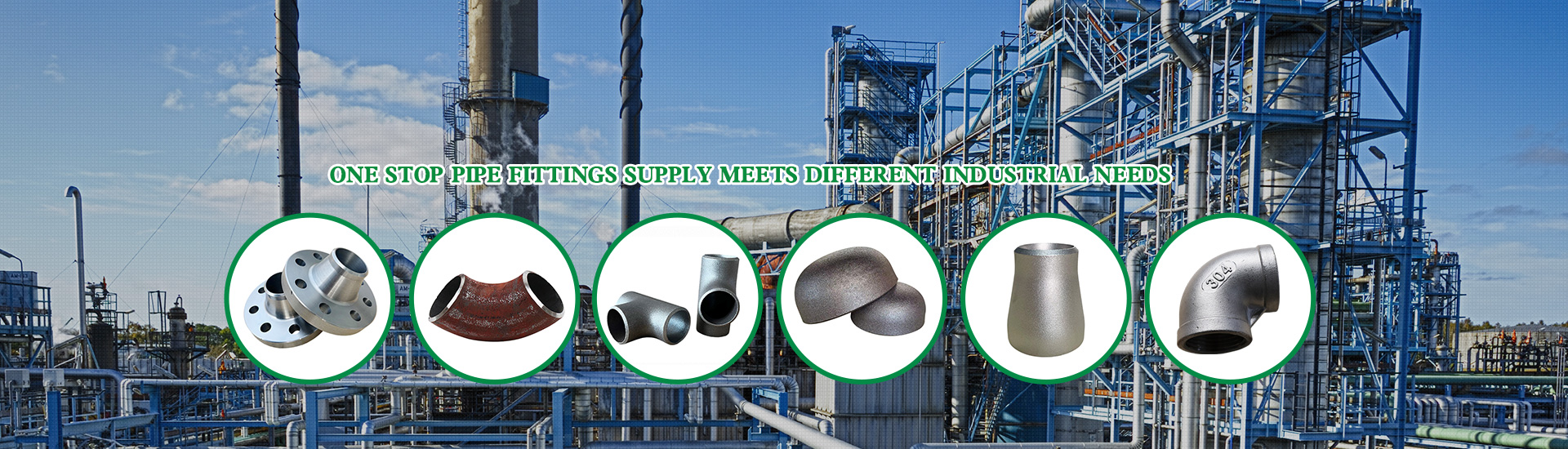
Industrial pipe fittings operate in demanding environments involving pressure, temperature changes, vibration, and corrosive media. Extending their service life is essential for reducing maintenance costs, preventing downtime, and ensuring system safety. The longevity of pipe fittings depends on material selection, installation quality, operating conditions, and maintenance practices.
1. Select the Right Material for the Application
Material selection is the foundation of long service life.
Common Options
Carbon Steel: strong and economical, suitable for non-corrosive environments
Stainless Steel: excellent corrosion resistance for chemical and marine applications
Alloy Steel: suitable for high-temperature and high-pressure systems
Key Principle
Match material properties with:
Fluid type
Temperature range
Pressure level
Environmental exposure
Incorrect material selection is one of the fastest ways to reduce service life.
2. Apply Proper Anti-Corrosion Protection
Corrosion is the leading cause of fitting failure.
Protection Methods
Epoxy coating
Galvanizing (hot-dip zinc coating)
Fusion bonded epoxy (FBE)
Polyurethane coatings
Internal linings (rubber, epoxy, PTFE)
Best Practice
Ensure proper surface preparation (e.g., sandblasting to Sa2.5 standard) before coating application.
3. Ensure Correct Installation Practices
Improper installation significantly shortens service life.
Key Requirements
Correct alignment of pipes and fittings
Proper torque control for bolted connections
Qualified welding procedures for welded joints
Avoid forcing misaligned components
Installation quality directly affects long-term reliability.
4. Control Operating Conditions
Operating beyond design limits accelerates wear and failure.
Important Controls
Avoid excessive pressure surges
Maintain stable temperature conditions
Prevent water hammer effects
Control fluid velocity in pipelines
Recommendation
Always operate within design specifications (pressure, temperature, and flow rate).
5. Reduce Corrosion and Erosion Effects
Fittings are often damaged by combined corrosion and erosion.
Prevention Methods
Use long-radius elbows in high-velocity systems
Install wear-resistant liners in abrasive flow conditions
Reduce turbulence at pipe direction changes
Use corrosion-resistant alloys in harsh environments
6. Improve System Design
Good engineering design greatly extends service life.
Design Considerations
Avoid unnecessary stress concentration points
Provide adequate pipe supports
Include expansion joints for thermal movement
Ensure proper drainage in liquid systems
Poor design leads to mechanical fatigue and premature failure.
7. Perform Regular Inspection and Maintenance
Preventive maintenance is critical for long-term performance.
Inspection Methods
Visual inspection for corrosion or leakage
Ultrasonic thickness measurement
Pressure testing
Non-destructive testing (NDT)
Maintenance Actions
Replace damaged gaskets or seals
Reapply protective coatings when needed
Tighten or replace loose fasteners
Early detection prevents major failures.
8. Prevent Galvanic Corrosion
Galvanic corrosion occurs when different metals are in contact.
Prevention Measures
Avoid mixing incompatible metals
Use insulating gaskets or sleeves
Apply protective coatings between dissimilar metals
This is especially important in marine and chemical environments.
9. Improve Storage and Handling Practices
Damage during storage or transport can shorten service life before installation.
Best Practices
Store fittings in dry, ventilated areas
Use protective caps on open ends
Avoid direct contact with soil or moisture
Prevent mechanical impact damage
10. Use High-Quality Certified Products
Low-quality fittings often fail prematurely.
Recommendations
Use products compliant with ASME, ASTM, or EN standards
Verify material certificates (MTC)
Select reputable manufacturers
Avoid counterfeit or non-certified components
Quality assurance ensures predictable long-term performance.
Conclusion
Improving the service life of industrial pipe fittings requires a comprehensive approach that includes proper material selection, corrosion protection, correct installation, controlled operating conditions, and regular maintenance. When these factors are properly managed, pipe fittings can achieve significantly longer service life, improved reliability, and reduced lifecycle costs in industrial systems.
References
ASME B31.3 – Process Piping
ASTM A234 – Pipe Fittings of Wrought Carbon and Alloy Steel
ASTM A403 – Stainless Steel Pipe Fittings
ISO 12944 – Corrosion Protection of Steel Structures
API 570 – Piping Inspection Code
ASM Handbook – Corrosion and Materials Engineering