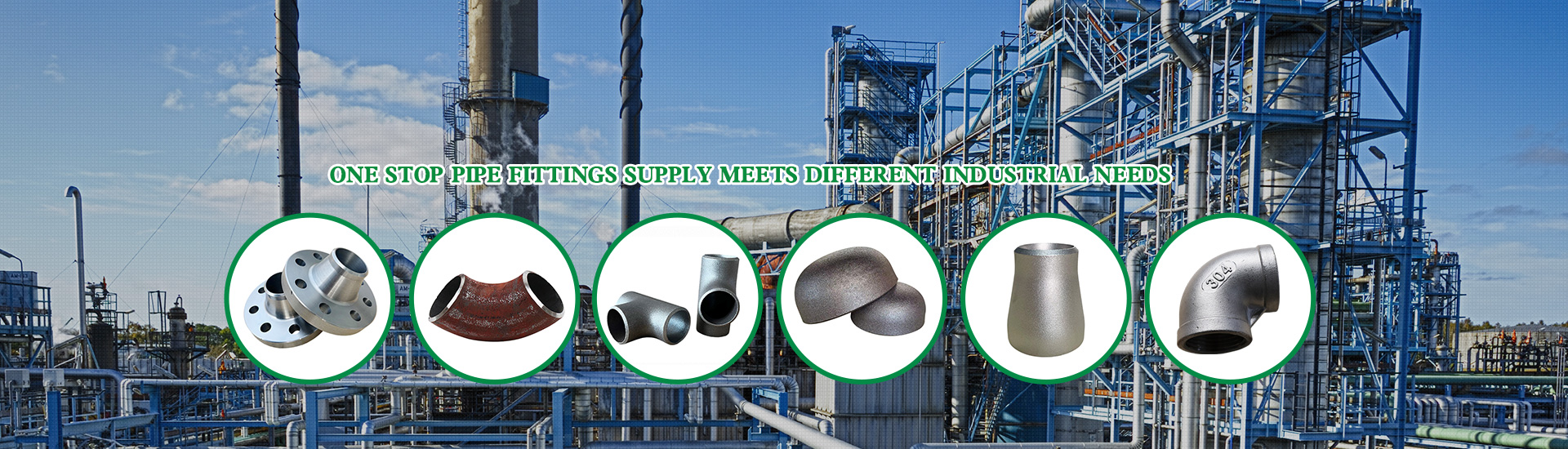
Butt weld elbows are widely used in industrial piping systems because of their high strength, leak-free performance, and suitability for high-pressure and high-temperature applications. The manufacturing process must be strictly controlled to ensure dimensional accuracy, structural integrity, and compliance with international standards.
1. Raw Material Selection
The process begins with selecting high-quality raw materials.
Common Materials
Carbon steel (ASTM A234 WPB)
Stainless steel (ASTM A403 304/316)
Alloy steel (for high-temperature service)
Requirements
Verified chemical composition
Mechanical property certification (MTC)
No surface defects such as cracks or laminations
Proper material selection directly affects final product performance.
2. Cutting and Preparation
The raw steel pipe is cut into appropriate lengths based on elbow size and design requirements.
Key Steps
Precision cutting according to production drawings
Removal of burrs and sharp edges
Cleaning of pipe surface before forming
Accurate cutting ensures proper wall thickness distribution during forming.
3. Heating Process (Hot Forming)
Most butt weld elbows are produced using hot forming.
Process Description
Pipe is heated to high temperature (typically 850–1100°C depending on material)
Heating is controlled to ensure uniform temperature distribution
Avoid overheating or uneven heating
Importance
Proper heating ensures:
4. Forming Process
This is the core manufacturing stage.
Common Methods
4.1 Mandrel (Hot Pushing) Forming
4.2 Induction Bending
4.3 Die Forming
Key Control Points
Wall thickness distribution (inner vs outer radius)
Ovality control
Accurate bending angle (45°, 90°, 180°)
5. Heat Treatment
After forming, heat treatment is often required to restore material properties.
Types of Heat Treatment
Purpose
Improve mechanical strength
Eliminate internal stress
Enhance toughness and stability
6. Surface Treatment
Surface quality is critical for corrosion resistance and appearance.
Common Methods
Shot blasting or sand blasting
Pickling (for stainless steel)
Passivation treatment
Anti-corrosion coating (for carbon steel)
Requirements
7. End Beveling and Machining
To prepare for welding installation:
Bevel ends according to ASME B16.9 standards
Ensure correct angle and root face
Machine ends if required for dimensional accuracy
Proper beveling ensures high-quality field welding.
8. Inspection and Quality Control
Strict inspection ensures product reliability.
Dimensional Inspection
Outer diameter (OD)
Wall thickness
Center-to-end dimensions
Angle accuracy
Non-Destructive Testing (NDT)
Ultrasonic testing (UT)
Radiographic testing (RT)
Magnetic particle testing (MT)
Dye penetrant testing (PT)
Mechanical Testing
9. Marking and Identification
Each elbow must be clearly marked for traceability.
Marking Includes:
Size and angle
Material grade
Heat number
Standard compliance (ASME, EN, etc.)
Manufacturer identification
10. Packaging and Storage
Proper packaging ensures product safety during transport.
Requirements
Protective coating or oiling (carbon steel)
Plastic caps on ends
Wooden boxes or steel frames for large sizes
Moisture-proof storage environment
Conclusion
The butt weld elbow manufacturing process involves multiple precise steps including material selection, hot forming, heat treatment, machining, and strict quality control. Each stage plays a critical role in ensuring the final product meets international standards and performs reliably in demanding industrial environments. Proper process control ensures high strength, accurate dimensions, and long service life.
References
ASME B16.9 – Factory-Made Wrought Buttwelding Fittings
ASTM A234 – Carbon and Alloy Steel Pipe Fittings
ASTM A403 – Stainless Steel Pipe Fittings
API 5L – Line Pipe Specification
ISO 9001 – Quality Management Systems
ASM Handbook – Volume 14: Forming and Forging