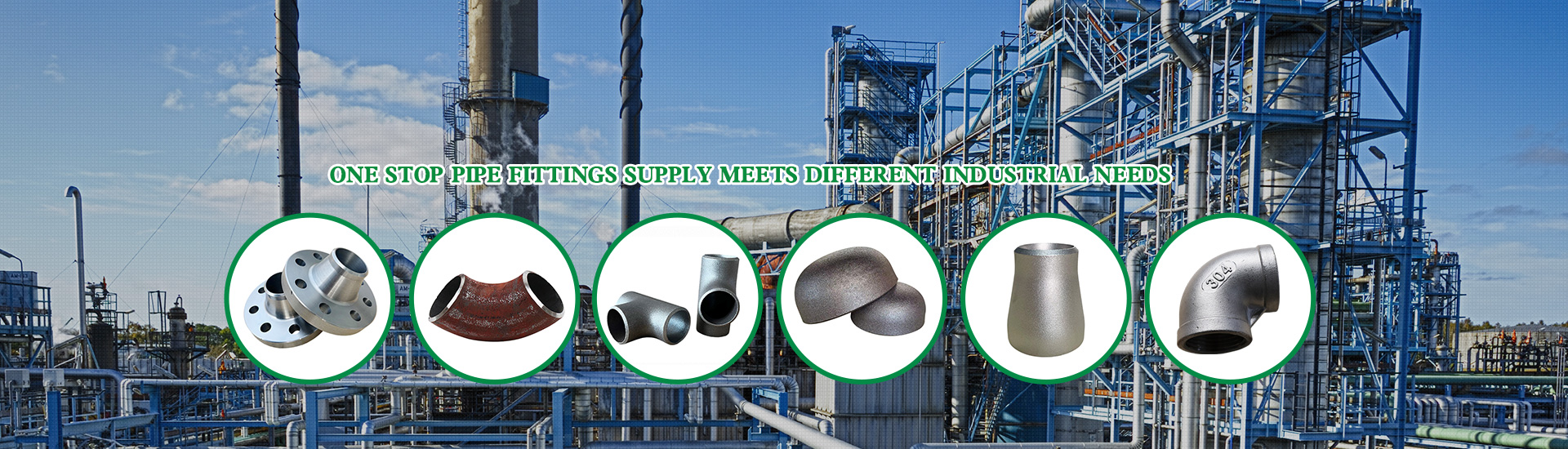
Pipe fitting surface treatment is a critical process in industrial manufacturing that improves corrosion resistance, enhances durability, and extends service life. Since pipe fittings are often exposed to moisture, chemicals, and high temperatures, proper surface treatment ensures stable performance in demanding environments.
1. Why Surface Treatment Is Important
Surface treatment is applied to pipe fittings to:
Prevent corrosion and rust formation
Improve chemical resistance
Enhance wear and erosion resistance
Increase service life
Improve appearance and surface quality
Ensure compliance with industrial standards
Without proper treatment, even high-quality materials can fail prematurely.
2. Shot Blasting (Surface Cleaning)
Shot blasting is one of the most common surface preparation methods.
Process
High-speed steel shots are blasted onto the surface to remove:
Rust
Oxide scale
Welding slag
Contaminants
Benefits
Improves surface roughness for coating adhesion
Provides uniform cleaning
Prepares surface for painting or coating
Typical Standard
3. Sand Blasting
Sand blasting uses abrasive sand particles instead of steel shots.
Features
Effective for heavy rust removal
Suitable for complex shapes
Produces rough surface texture
Applications
4. Hot-Dip Galvanizing
Hot-dip galvanizing involves coating fittings with molten zinc.
Process
Advantages
Excellent corrosion resistance
Long-term outdoor protection
Self-healing effect for minor scratches
Applications
5. Epoxy Coating
Epoxy coating is widely used in industrial pipelines.
Process
Advantages
Applications
6. Fusion Bonded Epoxy (FBE) Coating
FBE is a high-performance coating system.
Process
Advantages
Applications
Buried pipelines
Offshore systems
High-pressure pipelines
7. Polyethylene (PE) Coating
PE coating provides thick external protection.
Features
Applications
8. Zinc Coating (Electro-Galvanizing)
Electro-galvanizing applies a thin zinc layer using electrochemical methods.
Advantages
Limitations
9. Pickling and Passivation (Stainless Steel)
Used mainly for stainless steel pipe fittings.
Pickling
Passivation
Benefits
Restores corrosion resistance
Improves surface cleanliness
Enhances long-term durability
10. Painting and Protective Coatings
Industrial paints are commonly used for carbon steel fittings.
Types
Advantages
11. Internal Lining Treatments
Internal coatings protect against fluid corrosion and scaling.
Common Linings
Rubber lining
Epoxy lining
PTFE lining
Cement mortar lining
Applications
Chemical pipelines
Water treatment systems
Slurry transport systems
12. Surface Treatment Selection Guide
Based on Environment
Mild environment → Painting or electro-galvanizing
Outdoor or humid environment → Hot-dip galvanizing
Chemical environment → Epoxy or FBE coating
Underground pipelines → PE or FBE coating
Stainless steel systems → Pickling + passivation
Conclusion
Pipe fitting surface treatment methods play a vital role in ensuring corrosion resistance, mechanical durability, and long-term performance. From basic cleaning methods like shot blasting to advanced coatings such as FBE and polyethylene, each technique serves specific industrial conditions. Proper selection of surface treatment significantly improves system reliability and reduces maintenance costs.
References
ISO 8501-1 – Surface Preparation Standards
ISO 12944 – Corrosion Protection of Steel Structures
ASTM A123 – Zinc (Hot-Dip Galvanized) Coatings
ASTM A380 – Cleaning and Passivation of Stainless Steel
AWWA C210 – Liquid Epoxy Coating Systems
NACE Corrosion Control Standards Handbook